Description
Lung cancer
What is Lung Cancer?
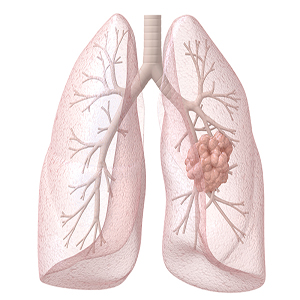
Lung cancer begins when cells from structurally normal lung tissue multiply outside of need and control to
form a mass (tumor) in the lung. This mass grows in its original
environment, and in later stages it spreads to surrounding tissues or to
distant organs (liver, bone, brain, etc.) through the circulation, causing a
fence. Lung cancer is the leading cause of death among men and the second
most common type of cancer in women. Approximately 1.3 million men
worldwide die of lung cancer each year. However, with the development of
new treatments, life expectancy and quality of life have increased.
Types of Lung Cancer
Lung cancer is divided into two main groups, representing
different cell types and requiring different treatments. There are
different treatments for both groups:
Small cell extracellular lung cancer (KHDAK)
Small cell lung cancer
Small cell lung cancer is a type of cancer that
progresses more rapidly and often has distant metastases when
diagnosed. Eighty-five percent of patients have KHDAK and 15% have small
cell lung cancer.
Stages of lung cancer
Different methods can be used to stage lung cancer;
BT – Computed Tomography
MRI – Magnetic Resonance Imaging
PET / BT – Positron Emission Tomography / Computed Tomography
Bone scintigraphy Mediastinoscopy / Mediastinotomy: Both have undergone
surgery to show whether the cancer has spread to the lymph nodes in the chest.
For small cell lung cancer, the stage is limited and it is a popular disease. There are four stages
for KHDAK. While stage 1 and 2 refer to a local disease, stage 3 and 4
involve the spread to the lymphatic system and distant organs through the
bloodstream.
What are the symptoms of lung cancer?
The disease may not lead to significant complaints until it reaches a very advanced stage. Progress
without symptoms is the most important factor that makes lung cancer so
dangerous. Among the symptoms that suggest a person has cancer;
Someone who smokes and has chronic bronchitis, persistent
seasonal cough and sputum complaints, increasing shortness of breath, sputum
bleeding, especially chest pain, unexplained weight loss, hoarseness, wheezing,
especially in the western part of the back or shoulders Breathing, feeling very
tired are complaints that should raise suspicion for cancer.
Although some people with lung cancer have a cough,
wheezing, difficulty breathing, and chest discomfort, it usually does not cause
any noticeable symptoms at an early stage. The patient may be accidentally
diagnosed when a chest film or CT scan is performed for different reasons.
What are the methods of diagnosing lung cancer?
Your doctor will ask for one or more tests to see if
there is a mass in your lungs, such as a lung film or lung tomography. If
your lung also detects an abnormality, it will assess the mass with PET / BT at
the beginning of the biopsy and ask for a biopsy to determine the structure of
the mass. For biopsy, a tissue sample is removed from the suspected area
of the lung and
examined under a microscope to diagnose the disease. Tissue samples can also be taken at nearby lymph nodes.
Biopsy Methods;
Bronchoscopy: A thin, light balloon is inserted
into the mouth to examine the airways. A small piece
of tissue is taken from the bronchial mucosa near the suspected or tumor area.
Needle aspiration: The process of removing a small piece of
tissue from a tumor by inserting a biopsy needle from the chest wall into the
tumor area. This operation is also accompanied by radiological
indications.
Thoracentesis: The sampling of fluid from the lungs using a biopsy needle.
Thoracotomy: The surgical opening of the chest in order to remove a piece directly
from the tumor. When a biopsy reveals that the patient has lung cancer,
tests are performed to determine the extent (stage) of the cancer.
What are the risk factors for lung cancer?
There are various risk factors that trigger the appearance of lung cancer. Smoking and tobacco
use, passive smokers (exposure to tobacco smoke), exposure to toxic gases,
asbestos, air pollution, and lung disease (tuberculosis) are among the factors
that increase the risk of contracting the disease.
A person who has had lung cancer once has a higher risk
of recurrence than someone who has never had cancer. There are also some
risky professions that prepare the ground for lung cancer. People working
in the port with mining, textiles, insulation, plastic industry,
petrochemistry, paint, mining and welding can be included in this group.
Lung Cancer Treatment Methods
Small Cell External Lung Cancer (KHDAK):
The choice of treatment depends on the popularity of the disease. In this
group of lung cancers, surgery is the most popular form of
treatment. Radiotherapy and chemotherapy are also used to slow the
progression of the disease and to monitor findings.
Small cell lung cancer (Khaki): In many cases, the disease has
spread to other parts of the body when diagnosed. For this reason,
surgical treatment is rarely used in small cell lung cancer. Doctors
generally choose to use chemotherapy to reach the cancer cells that have spread
to the body. Treatment that includes chemotherapy is also targeted at
cancers of the lungs or other parts of the body. For some patients, brain
radiotherapy may be used, even if there is no cancer. This treatment is
called protective brain radiation. It is given to prevent the formation of
cancer in the brain. Depending on the size, spread and pathological type
of the tumor, one or more of the following treatments can be used:
Surgical treatment (surgical removal of lung cancer)
Chemotherapy (drug treatment); neoadjuvant
(preoperative) and adjuvant (postoperative)
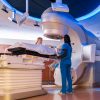
Radiotherapy (radiation therapy)