Description
What are the Clinical Types of Spina Bifida?
A) Spina Bifida Cystica
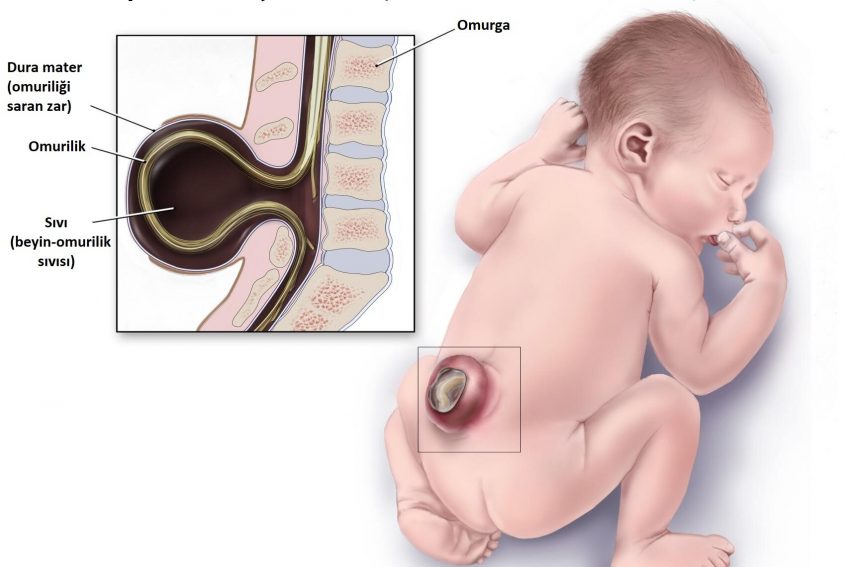
It is the cystic form of spina bifida. There are three types of
it; meningocele, myelomeningocele and myelosis.
Meningocele; cystic enlargement. The defect is covered with the
skin, the neurological structures are in the canal and there may be no
neurological damage since they are not damaged much.
Myelomeningocele, herniated sac contains the spinal cord membranes, nerve roots
and the spinal cord itself. Spina is the most important and common type of
bifida. Neurological problems are common. When the baby is born, it should be
directed to surgery and the defect should be closed.
myelochia; It is the most severe form, the nerve tissue is completely exposed.
B) Spina Bifida Occult
It is only the bone defect in the back of the spine where the
spinal cord is not involved. There may be dermal pit, hair bundle or increased
pigmentation in the sacral area. It can be seen in a large number of healthy
people.
What Are Spina Bifida Risk Factors?
Although many risk factors can be considered, the exact cause is
not clear. Normal prenatal development of the neural tube starts on the 16th
day and is completed on the 28th day. Closure defects occur during this period.
In other words, the defect occurred before the mother knew that she was
pregnant.
- Folate deficiency, increasing the
mother’s folate level significantly reduced the formation and recurrence
of neural tube defects.
- Vitamin B12 deficiency
- Maternal age; Common in mothers over 40
and under 19
- Genetic
- Exposure to toxic substances; especially
exposure to pesticides
- It is necessary to avoid high body
temperature of the mother during pregnancy and excessive temperature in
the first trimester of pregnancy.
- Excessive coffee consumption, especially
excessive coffee consumption one year before pregnancy, but caffeinated tea
has a protective effect.
- Medicines; methotrexate, trimethoprine,
sulfonamides, antidepressants, antiepileptics
- High risk in women with pregestational
diabetes
- Obesity
What are the Clinical Symptoms?
- Loss of strength and paralysis in the
arms or legs depending on the affected area
- Loose or spastic paralysis
- Loss of sensation
- Hydrocephalus
- Stretched cord
- Neurogenic bladder and bowel
- Scoliosis
- Hip dislocation, contractures in hips and
knees, foot deformities
- Wounds
- Obesity, short stature, precocious
puberty
- Increased risk of osteoporosis with
fractures
- Serious impairments in visual perception
skills and attention
- Sexual dysfunction and fertility
- Increased frequency of depression
- High latex allergy
What is Applied in the Treatment of Spina Bifida?
Prenatal treatment
Maternal serum alpha-protein (AFP) or detailed USG are
frequently used to determine the presence or possibility of spina bifida in the
fetus. Serum AFP measurement is made 16-18 weeks after fertilization. Detailed
USG of pregnancy 14-16th. May reveal the presence of spina bifida at week. As a
result, if the diagnosis of spina bifida becomes definite, pregnancy can be
terminated or families who do not terminate their pregnancy are prepared for a
safe delivery. Such babies should be delivered by cesarean section in a
comprehensive center.
Neonatal Treatment
First of all, the defect should be closed within the first 48
hours after birth in order to reduce the risk of infection and to protect the
existing neurological function. Shunts may be required in those with
hydrocephalus. Most patients have a neurogenic bladder. Urological and
nephrological treatment should be started immediately after birth to prevent
kidney damage.
What to do in Spina Bifida Rehabilitation?
Early rehabilitation includes bladder and bowel care, prevention
of contractures, hip dislocation and spine deformity, normal walking with
orthoses, and use of a wheelchair. Families are taught early positioning,
holding and transferring the baby, and range of motion exercises for those with
hip and knee contractures. Rehabilitation should be done according to the
lesion level, age of the child, and accompanying problems.
What Are the Common Problems in Spina Bifida?
- Hip Problems and Treatment: Hip deformities in children
are caused by weakness and imbalance of the muscles around the hip. It can
cause pelvic curvature and subsequent scoliosis if not treated properly.
Surgery for correcting hip deformities is mostly performed to correct hip
contractures.
- Scoliosis Treatment: Progressive scoliosis may be due to
congenital spinal malformations, muscle imbalance and some neurological
disorders. Spinal orthoses and functional strengthening exercises can be
given to patients with scoliosis less than 50 degrees to correct sitting
balance, to control the inclination during growth, and to delay surgery.
Scoliosis surgery is controversial. In those with limited sitting
function, surgery can correct the sitting balance.
- Fractures: Common in the lower extremities. It is often seen after falls in walking
patients. It is mostly caused by osteoporosis in those who cannot walk. It
may not be very distinguishable since it has no sense of pain. However,
erythema, swelling, local temperature increase may occur. Fractures heal
quickly in children with spina bifida. It should be treated with
non-surgical methods.
How Does Spina Bifida Child Walk?
The possibility of walking in children with spina bifida depends
primarily on the level of the lesion, the severity of orthopedic deformities,
cognitive functions, surgery, motivation, obesity, and age. With proper
support, surgery, rehabilitation, and orthosis, many children with spina bifida
can walk.
What are the Problems in Adult Spina Bifida Patients?
- Pain; is a frequent complaint. In particular, back, neck and leg pain are seen.
Shoulder and elbow pains are mostly due to overuse.
- Scoliosis; It does not progress
after adolescence, but can cause posture and sitting disorders, pressure
sores, gait loss, respiratory dysfunction and pain
- Osteoporosis
- Neurological problems;
shunt obstruction may develop as a result of stretching of the spinal cord
- Pressure sores, burns result from loss of sensation
- Kidney failure